 1959:
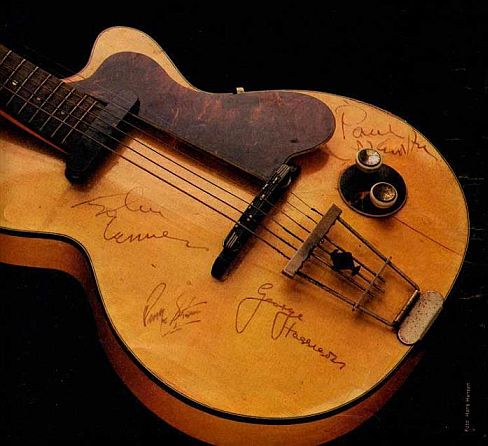
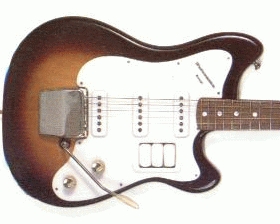
Resonet Futurama solidbody electric, red
sunburst, vintage c. 1958: When Harrison
went to Hessy's Music in Liverpool on 20 November
looking for a new guitar, he was thinking
"Stratocaster," but the closest Frank Hessy could come
was this sleek three-pickup Futurama (originally called
a Grazioso Resonet, manufactured by the Delicia company
in Czechoslovakia, and renamed by Selmer, who imported
them into the U.K.). 1959:
Resonet Futurama solidbody electric, red
sunburst, vintage c. 1958: When Harrison
went to Hessy's Music in Liverpool on 20 November
looking for a new guitar, he was thinking
"Stratocaster," but the closest Frank Hessy could come
was this sleek three-pickup Futurama (originally called
a Grazioso Resonet, manufactured by the Delicia company
in Czechoslovakia, and renamed by Selmer, who imported
them into the U.K.). 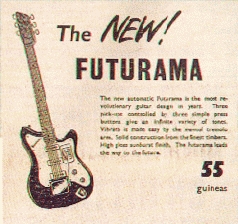 The price was a whopping £55, a small
fortune in those days. Its advert bragged it
was "made from the finest selected timbers" and was
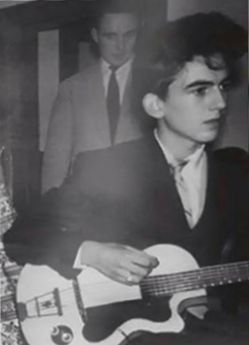
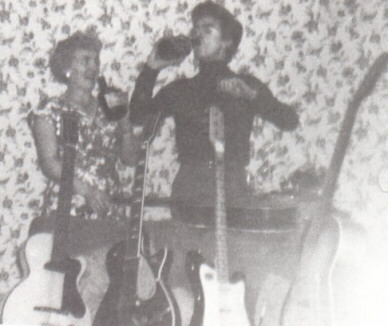
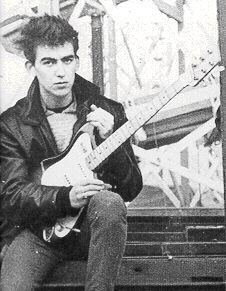
"practically indestructible." Harrison is seen
playing it in pictures of the Larry Parnes audition and
the Scotland tour (May-June 1960), and brought it along
on the Beatles' first trip to Hamburg later that year.
During their second Hamburg trip he used it on their
first proper recording session (for Bert Kaempfert, June
1961), which produced, among other tunes, "Cry For a
Shadow." The price was a whopping £55, a small
fortune in those days. Its advert bragged it
was "made from the finest selected timbers" and was
"practically indestructible." Harrison is seen
playing it in pictures of the Larry Parnes audition and
the Scotland tour (May-June 1960), and brought it along
on the Beatles' first trip to Hamburg later that year.
During their second Hamburg trip he used it on their
first proper recording session (for Bert Kaempfert, June
1961), which produced, among other tunes, "Cry For a
Shadow." 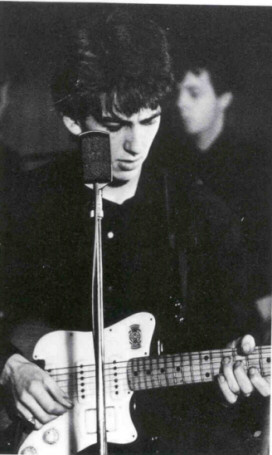 A month later the band was back
in Liverpool, and the rapidly improving Harrison went
looking for a better guitar. The Futurama "was a
dog to play," he recalled in the Guitar Player
interview (November '87). "It had the worst
action. It had a great sound, though, and a real
good way of switching in the three pickups and all the
combinations." In the Anthology
book, Harrison recalls the day he found this instrument
in Rushworth and Dreaper's shop in Liverpool.
"Paul came with me when I bought the Futurama. It
was on the wall with all the other guitars, and Paul
plugged it into the amp but he couldn't get any sound
out of it, so he turned the sound right up. The
guitar had three rocker switches, and I just hit one and
there was an almighty boom through the amplifier, and
all the other guitars fell off the wall. My mother
signed the hire-purchase agreement for me . . . "
Records show that Brian Epstein eventually paid off the
account on this guitar. What happened to the
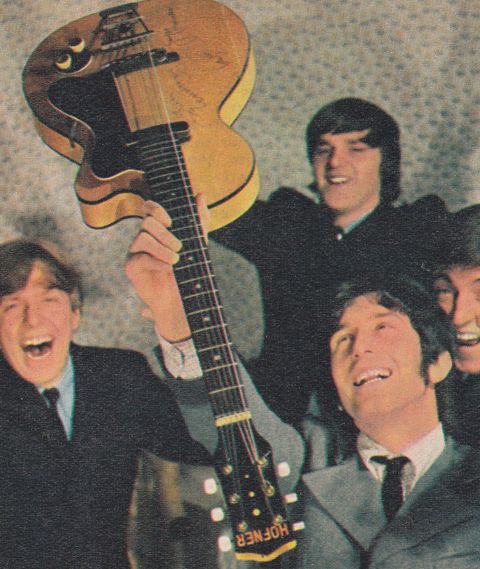
Futurama? In '64 Harrison gave it to Beat
Instrumental magazine to raffle off, but the
winner decided he'd rather have the money, so publisher
Sean O'Mahoney paid the man and kept the Futurama, and
he still has it. A month later the band was back
in Liverpool, and the rapidly improving Harrison went
looking for a better guitar. The Futurama "was a
dog to play," he recalled in the Guitar Player
interview (November '87). "It had the worst
action. It had a great sound, though, and a real
good way of switching in the three pickups and all the
combinations." In the Anthology
book, Harrison recalls the day he found this instrument
in Rushworth and Dreaper's shop in Liverpool.
"Paul came with me when I bought the Futurama. It
was on the wall with all the other guitars, and Paul
plugged it into the amp but he couldn't get any sound
out of it, so he turned the sound right up. The
guitar had three rocker switches, and I just hit one and
there was an almighty boom through the amplifier, and
all the other guitars fell off the wall. My mother
signed the hire-purchase agreement for me . . . "
Records show that Brian Epstein eventually paid off the
account on this guitar. What happened to the
Futurama? In '64 Harrison gave it to Beat
Instrumental magazine to raffle off, but the
winner decided he'd rather have the money, so publisher
Sean O'Mahoney paid the man and kept the Futurama, and
he still has it. |